



Use a realistic task with an observable result
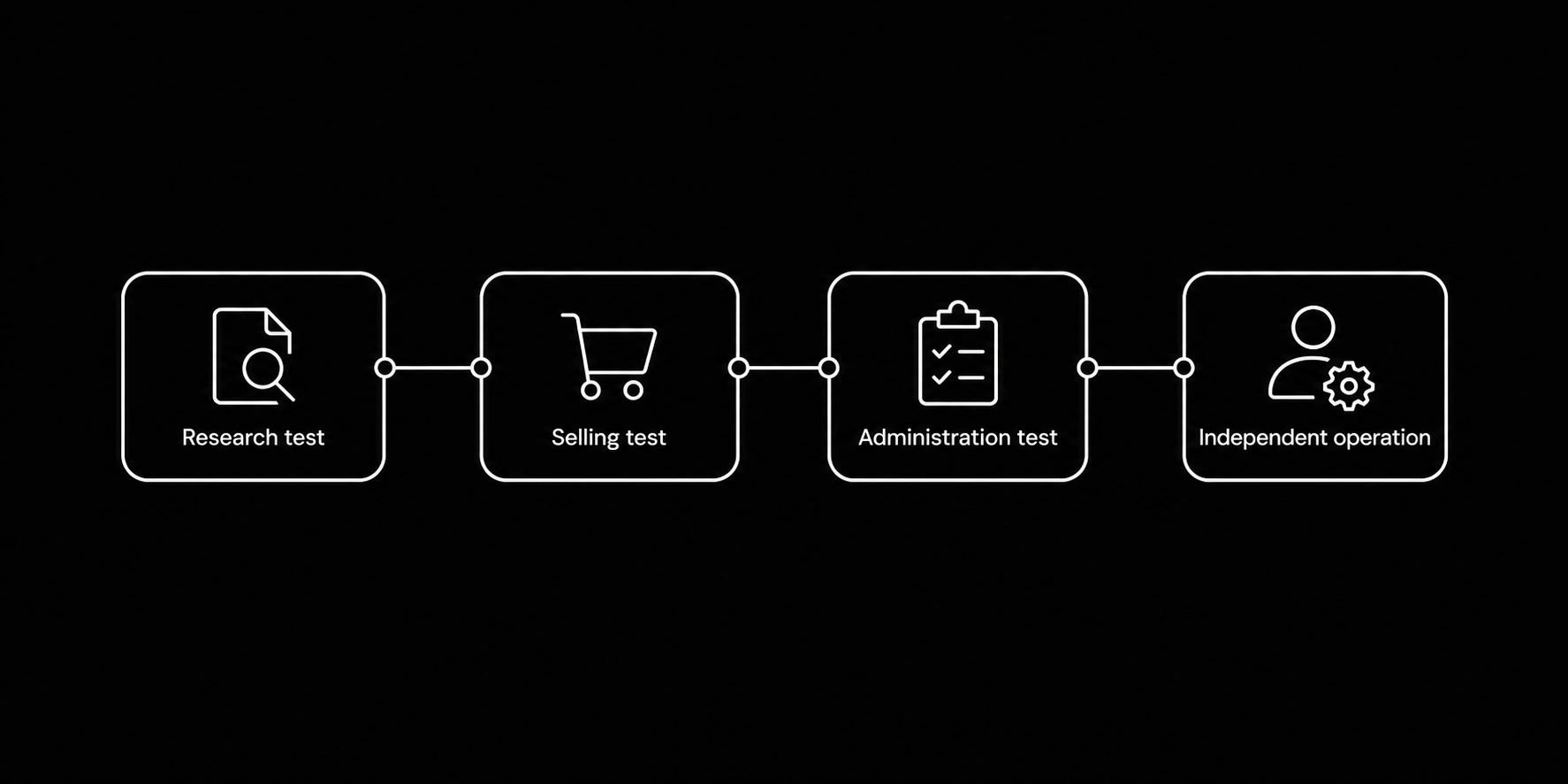
Choose tests that match the person's actual responsibility. A seller should demonstrate commercial judgment; an administrator should demonstrate access and recovery; a researcher should demonstrate evidence and disqualification. Do not use one generic quiz for every role.
Include a normal case and an exception. Define acceptance in advance and record what the operator did, what evidence they used and where help was required. A failed test is useful while there is time to coach or repair the system. Avoid declaring independence because the person can follow a memorized example.
| Decision | Evidence to use | What changes next |
|---|---|---|
| Research | New account with source, fit and rejection reasoning | Operator can reproduce the ICP rather than copy a list |
| Selling | Ambiguous buyer case with next action and escalation | Operator distinguishes evidence from optimism |
| Administration | Controlled error with recovery guide | Operator restores continuity without unsafe improvisation |
Work through the decision
Illustrative assessment: the seller receives a case with an enthusiastic user but no active buying project. They should record interest, clarify the decision and avoid inventing pipeline. The administrator receives a failed routing test and should restore the record without duplicate outreach.
Review the artifacts against the agreed rules. If the seller needs missing product context, update the playbook; if the administrator cannot recover because the workflow is agency-owned, fix ownership. Independence depends on both people and system design.
The operator knows the example but not the decision
A familiar demonstration can conceal dependence. Use a new account and an exception that requires judgment. Ask why the action is appropriate and what would change it, not only whether the person clicked the right buttons.
What I would do next
I would schedule one independent task for each future owner. Review the resulting record and reasoning, then repeat only where a specific unresolved gap justifies it.
Use an unfamiliar account as the handover test
Give the operator a new account and the same public evidence the founder would have. Ask for a fit decision, a discovery plan and the next proposed action. The assessor should compare the reasoning with the play’s rules before offering help.
A useful result may be “do not pursue.” The test measures judgment and responsible execution, not willingness to keep every account active. Record the specific missing capability and rehearse it again; avoid converting the checklist into a prediction of revenue.
| Task | Pass evidence | Rework when |
|---|---|---|
| Choose an account | Explains fit, source and a disqualifier. | Uses prestige or funding as proof of need. |
| Investigate pain | Asks neutral questions and follows the answer. | Treats a trigger as confirmed pain. |
| Progress a decision | Names the buyer’s next task, owner and timing. | Proposes follow-up without a buying purpose. |
| Handle an exception | Recognizes the boundary and escalates clearly. | Promises unsupported scope or terms. |
Connect this decision to the complete startup sales-motion plan.
Sources and research notes
- GitLabcustomer-ready shadow program
Company operating handbook
- AttioBack up workspace data
Product documentation
Primary sources reviewed October 6, 2026. The operating recommendations and worked scenarios are Daavid’s analysis. Illustrative numbers are assumptions, not measured client results. Company marks identify sources and prior experience; they do not imply a customer relationship or endorsement.

 Schematic